

Editor’s note: This article opens Phase II of the series. Where Phase I dismantled the mechanisms organisations rely on to govern autonomy: hierarchy, human oversight, and process. Phase II locates precisely where autonomous systems break. The failure surface is not cognition. It is interaction. What follows is a diagnostic claim.
If control is an architectural obligation, then we have to be precise about where architecture can still act.
In agentic systems, it does not act inside representation. It acts in interaction.
Much of the discourse treats agents as knowledge structures: nodes in graphs, holders of context, participants in memory systems. Those models are useful. They help us reason about retrieval, grounding, and coherence.
But representation is not where autonomy breaks.
Autonomy breaks in interaction.
At scale, the dominant failure modes are not cognitive. They are interactional: uncontrolled hand-offs, ambiguous authority, hidden coupling, and feedback loops that compound faster than governance can act.
You can perfectly represent an agentic system and still end up with:
Decisions that outrun accountability
Agents acting on partial or conflicting context
Coherence at design time, fragmentation at runtime
This is not a model problem.
It’s an architectural one.
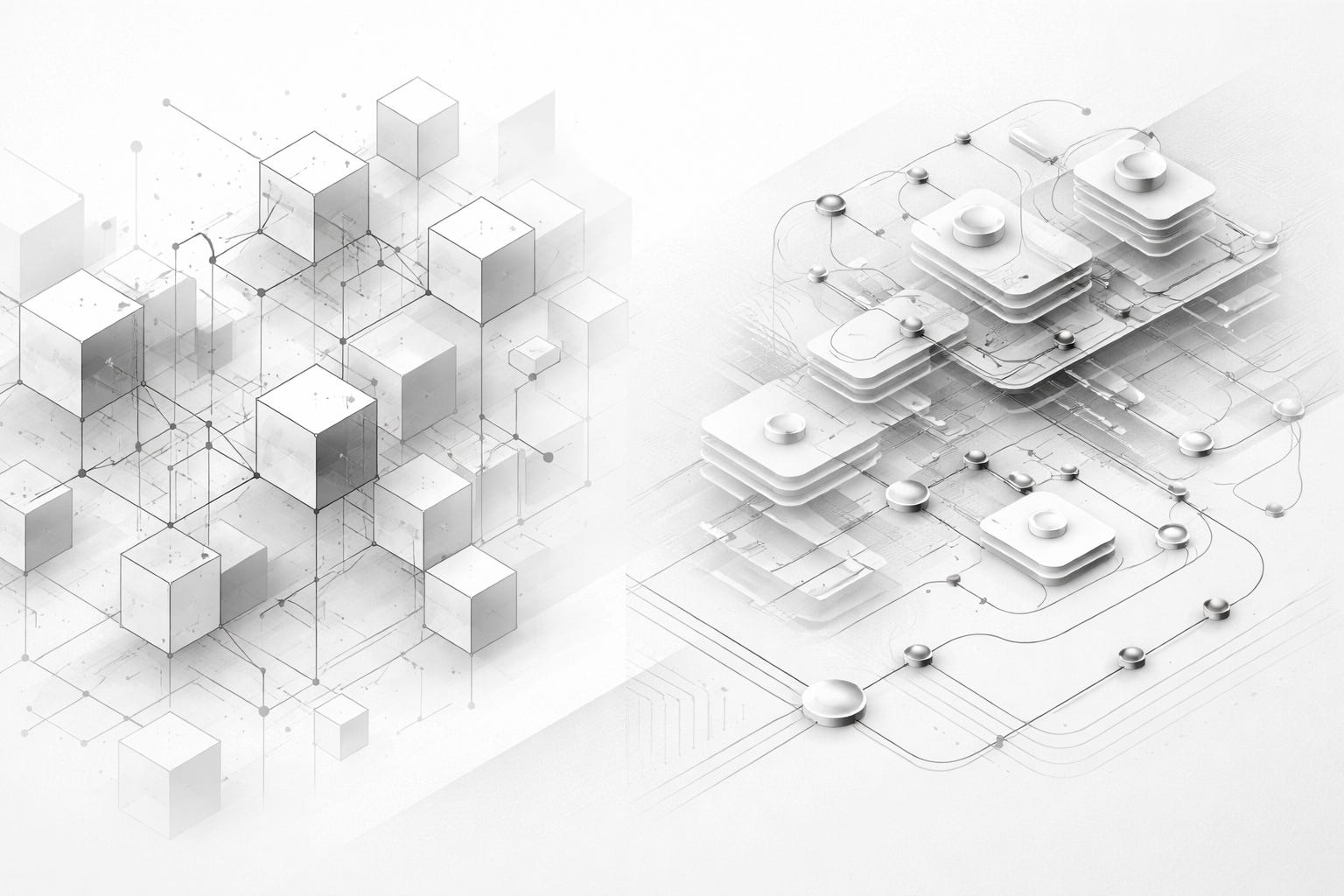
In resilient systems, agents do not operate as independent actors. They participate in a constrained interaction fabric; where routing, arbitration, escalation, and observability are explicit design choices.
Stability doesn’t emerge from intelligence.
It emerges from structure.
As autonomy increases, architecture becomes the only durable control surface.
Architecting autonomy, then, is not about making agents smarter. It’s about designing the conditions under which autonomous behavior remains legible, bounded, and survivable.
With this distinction in place, the focus shifts from what agents know to what systems allow them to do.
The next article moves from reframing to design, examining how control is reintroduced not through oversight or policy, but through deliberate structural choices that govern interaction at machine speed.
Only then can autonomy become something we engineer, rather than something we react to.
Next in the series: Bounded Interaction